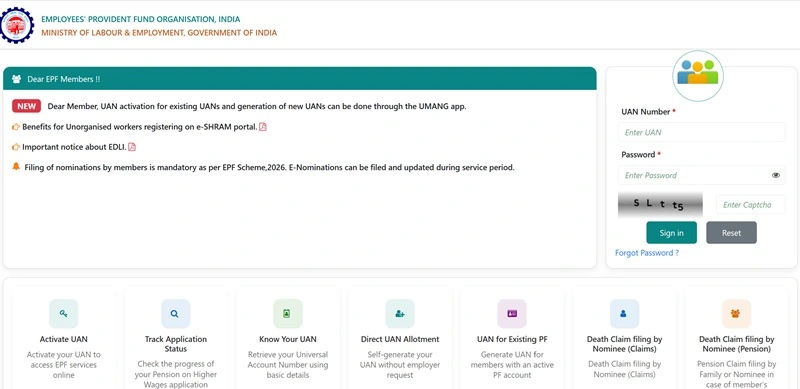
APB vs NACH credit through PFMS comes down to how the government addresses your money. An APB credit uses your Aadhaar number as the address, a bit like a mobile number that stays with you even if you move house. A NACH credit uses your account number and IFSC, more like a street address that has to be updated every time something changes. Both run on infrastructure built by the National Payments Corporation of India (NPCI), and both can deliver the same scholarship, wage or pension. But they fail for different reasons, need different fixes, and suit different people. This guide sets the two side by side.
| Point of comparison | APB (Aadhaar Payment Bridge) | NACH (National Automated Clearing House) |
| What identifies you | Aadhaar number | Account number and IFSC |
| Who maintains the link | NPCI’s Aadhaar mapper, updated by your bank | The scheme’s beneficiary records |
| Where the money lands | The bank account currently mapped to your Aadhaar | The exact account listed in the scheme’s records |
| Bank-side requirement | Bank’s Institution Identification Number (IIN) active on NPCI’s system | Valid, active IFSC |
| Needs Aadhaar? | Yes | No |
| Affected by change of account? | No, as long as the new account is mapped | Yes, scheme records must be updated |
| Affected by IFSC changes after bank mergers? | No | Yes |
| Typical statement label | APBCR, APB CR, APBS CREDIT | NACH CR, ACH CR |
| Suited to | Individual beneficiaries of DBT schemes | Beneficiaries without Aadhaar seeding, agencies, vendors and bulk payments |
| Mandatory example | MGNREGS wages, since 1 January 2024 | Payments to non-individuals such as agencies and firms |
How an APB Credit Finds Your Account
An Aadhaar-based payment works on two identifiers: your Aadhaar number, issued by UIDAI, and your bank’s Institution Identification Number, issued by NPCI. The scheme sends only your Aadhaar number with the payment. NPCI looks up its mapper to find which bank your Aadhaar is linked to, and that bank credits the account.
Three things have to be in place:
- Aadhaar seeded in your bank account, done at your branch with your consent.
- Your account mapped on NPCI’s mapper, which the bank does after seeding.
- Aadhaar linked in the scheme’s records, such as a job card for MGNREGS or an application on a scheme portal.
Because the scheme never stores your account number, it doesn’t need to know when you change banks. Map your new account and the next payment follows.
How a NACH Credit Finds Your Account
A NACH credit carries your account number and IFSC from the scheme’s records. NACH is NPCI’s centralised, web-based system for high-volume interbank transactions, used by banks, companies and government departments for bulk payments. PFMS validates the account with your bank when you’re registered, and payments then travel in bulk files to that exact account.
Since the scheme holds your bank details, any change has to be reported to the scheme office. If it isn’t, payments keep going to the old details.
Where Each One Has the Advantage
APB works better when:
- You change banks or open a new account. You only need to re-map Aadhaar at the new bank.
- Your bank’s IFSC changes after a merger or branch restructuring. APB doesn’t depend on IFSC.
- You want fewer data-entry errors. One 12-digit number replaces account numbers and IFSC codes that are easy to mistype.
NACH works better when:
- Your Aadhaar isn’t seeded or mapped yet, or authentication issues are holding up seeding.
- You want payments to go to a specific account that isn’t the one mapped to your Aadhaar.
- The recipient isn’t an individual. Agencies, NGOs, panchayat committees and vendors have no Aadhaar number, so account-based transfers are the only route.
The government chose APB for MGNREGS for exactly the first reason. Wages kept failing because workers changed bank accounts and the records weren’t updated, so the Rural Development Ministry made APB mandatory from 1 January 2024. By early 2025, Aadhaar seeding had reached 99.49% of the scheme’s 13.55 crore active workers, with exemptions allowed case by case where a gram panchayat faces technical or Aadhaar-related problems.
Why Payments Fail Under Each Mode
Common APB failures:
- Aadhaar not mapped on NPCI’s mapper, even though it’s seeded at the bank
- Aadhaar mapped to an account that has since been closed or frozen
- Account inactive due to pending KYC
- Bank’s IIN not active for Aadhaar-based credits
- Aadhaar not seeded in the scheme’s own records, such as the job card
Common NACH failures:
- Wrong account number in scheme records
- Old IFSC of a merged bank that’s no longer in use
- Account closed, dormant or frozen
- Name mismatch between scheme records and bank records at validation
- Account changed without informing the scheme office
The fix follows the mode. APB problems are solved at your bank. NACH problems are usually solved at the scheme office, which has to correct its records.
Which Payment Mode Will Your Scheme Use?
You don’t choose the mode yourself. The scheme or implementing agency decides it for each beneficiary when preparing payments in PFMS, usually based on whether your Aadhaar is seeded and mapped. In practice:
- Aadhaar-seeded and mapped beneficiaries are increasingly paid through APB, especially in large welfare schemes.
- Beneficiaries without Aadhaar mapping are generally paid account-based.
- Agencies, vendors and other organisations are always paid account-based.
If you’re not sure which mode applies to you, your bank statement label is a quick clue. An APB-type label means Aadhaar routing; a NACH or NEFT label means account routing.
Checking Your Aadhaar Mapping by Phone
NPCI runs a USSD service, *99*99#, for checking Aadhaar mapping without internet. Dial it from any phone, enter your Aadhaar number when asked, confirm it, and the reply shows the bank your Aadhaar is currently mapped to.
It’s a handy check before an instalment is due. If the bank shown isn’t the one you want, visit the branch of your preferred bank and ask them to seed and map your Aadhaar there.
Switching From One Mode to the Other
Moving to APB:
- Seed Aadhaar in your preferred bank account at the branch, giving written consent.
- Ask the bank to confirm that the account is mapped on NPCI’s mapper.
- Make sure your Aadhaar is recorded in the scheme’s database, such as your job card or scheme application.
Staying on account-based payments:
- Give the scheme office your correct account number and current IFSC.
- Report any change of account or IFSC immediately, in writing.
- Keep the account active with regular transactions so it doesn’t turn dormant.
Receiving APB payments in a different bank:
Seed and map Aadhaar at the new bank. The new mapping replaces the old one for Aadhaar-based payments, so you don’t need to inform the scheme separately.
FAQs
Q1. What is the main difference between APB and NACH credit?
A. APB uses your Aadhaar number to identify the mapped bank account through NPCI’s Aadhaar Mapper, while NACH uses the bank account number and IFSC recorded by the scheme or agency.
Q2. Which is better, APB or NACH?
A. APB can be useful for individuals whose bank account or IFSC changes, provided their Aadhaar mapping is updated correctly. NACH is suitable for beneficiaries without Aadhaar mapping and for payments to organisations.
Q3. Can I choose between APB and NACH for my scheme payment?
A. Usually, no. The concerned scheme or government agency decides the payment mode, often based on whether the beneficiary’s Aadhaar is properly seeded and mapped.
Q4. Why did my APB payment go to a different bank?
A. APB sends the payment to the bank account currently mapped to your Aadhaar in the NPCI system. If a different account is mapped, you may need to update the mapping through your preferred bank.
Q5. Is APB mandatory for MGNREGA wages?
A. APB has been mandatory for MGNREGS wage payments since 1 January 2024, although case-by-case exemptions may apply where beneficiaries face technical issues.
Q6. How can I check which bank my Aadhaar is mapped to without internet?
A. Aadhaar-bank mapping can be checked through supported offline or mobile banking channels where available. The exact USSD service and availability may vary by telecom operator and banking system.
Q7. Why do NACH payments fail after bank mergers?
A. A NACH payment may fail if the scheme’s records still contain an outdated IFSC associated with a merged bank. Updating the beneficiary’s bank details with the current IFSC can help prevent such failures.
Q8. Can agencies and vendors receive APB payments?
A. No. APB is designed around an individual’s Aadhaar-linked bank mapping. Organisations, agencies, and vendors generally receive payments through account-based transfer systems.